
Protecting a residential investment demands an intentional strategy that unites interior living spaces with exterior building barriers. A private residence functions as a complex, interconnected environment where structural shells, underground utilities, and climate networks constantly interact. When regular wear begins to impact building envelopes or mechanical components, subtle issues can quickly cascade across the property. Minor drafts, slow drainage lines, or small shingle displacements often turn into widespread structural rot, water damage, and inflated energy expenses if left unaddressed. Establishing a clear, structured schedule for property upgrades safeguards long-term equity while maintaining daily household safety.
Developing an effective renovation plan requires evaluating how aesthetic improvements and functional defenses support one another. Modernizing high-traffic indoor rooms, such as kitchens, bathrooms, and utility basements, enhances daily comfort and prevents hidden water leaks from undermining floor assemblies. Concurrently, fortifying exterior defenses—such as roofs, perimeter gutters, and subterranean sanitation lines—shields the living area from unpredictable seasonal storms and ground saturation. Treating the property as a unified system enables homeowners to carry out durable renovations that reduce emergency expenses and ensure dependable performance across every season.
Tuning Central Ventilation and Calibrating Indoor Climate

The internal comfort and respiratory safety of a modern home depend largely on the efficiency of its central air distribution network. Concealed ductwork channels, supply registers, and return grilles operate continuously to circulate conditioned air throughout living zones, balancing humidity levels and filtering airborne particulates. When duct seams separate, internal static pressure shifts, or return plenums become choked with household dust, the entire climate system loses balance. These mechanical restrictions cause uneven temperature gradients, leaving upper-story bedrooms overheated in summer while lower living spaces remain cold and damp.
Correcting mechanical imbalances requires seasonal calibration of electrical and mechanical components. Scheduling comprehensive HVAC services allows certified technicians to test airflow volume with digital anemometers, adjust blower motor speeds, and seal duct joints using durable mastic paste. Professional technicians clean accumulation from squirrel-cage blower fans, measure temperature splits across heat exchangers, and recalibrate digital thermostats to restore balanced airflow. Proactive mechanical tuning relieves operational stress on system fans, eliminates interior cold spots, and significantly reduces monthly energy bills.
Recharging Refrigerant Coils and Restoring Compressor Efficiency
Central air conditioning systems face demanding workloads during extended summer heatwaves, extracting heat energy from indoor living areas and venting it into exterior spaces. This thermodynamic cycle depends entirely on sealed copper line sets, clean aluminum condenser fins, and unobstructed airflow around the outdoor housing. When outdoor condenser coils become clogged with windblown dust, lawn clippings, and tree pollen, the unit struggles to dissipate heat into ambient air. The compressor motor must then draw excessive electrical amperage, leading to elevated internal pressures, premature motor wear, and sharp declines in indoor cooling capacity.
Homeowners experiencing warm air coming from supply registers, unusually high electric bills, or frozen indoor evaporator coils require technical diagnostics. Scheduling timely ac repair ensures that sealed refrigerant loops are tested for hairline leaks using electronic sniffers and digital manifold gauges. Licensed technicians remove debris from delicate condenser fins using biodegradable chemical washes, replace failing run capacitors, and clean primary condensate drain lines to prevent overflow. Restoring the proper refrigerant charge and ensuring clear airflow across coils prevents costly compressor failures and keeps indoor environments comfortably cool throughout summer.
Vetting Licensed Contractors and Comparing Structural Bids
A complete roof teardown and deck replacement represents one of the most substantial financial investments an owner will undertake to protect their property. Because the overhead plane shields structural framing, insulation layers, and interior living zones from severe climate exposure, the standard of workmanship directly dictates how long the new materials will endure. Many homeowners make the mistake of selecting a provider based purely on the lowest price estimate, failing to evaluate critical qualifications such as local business longevity, crew certifications, and general liability insurance. Navigating proposals requires a thorough assessment of scope inclusions, such as synthetic underlayments, perimeter drip edge dimensions, and warranty coverage on manufacturer materials and labor.
Securing multiple written proposals from reputable residential roofing companies allows property owners to cross-examine project timelines, cleanup procedures, and safety measures. Qualified contractors provide verifiable proof of state licensing, manufacturer-certified installer status, and dedicated workers compensation policies that protect clients from third-party liability. Furthermore, skilled estimators conduct hands-on inspections from eave to ridge, calculating attic ventilation needs and identifying rotted wooden fascia boards before finalizing cost estimates. Partnering with established trade professionals guarantees that the work adheres to local building codes, passes municipal inspections, and delivers lasting protection.
Tearing Down Weathered Layers and Fastening Modern Shingles
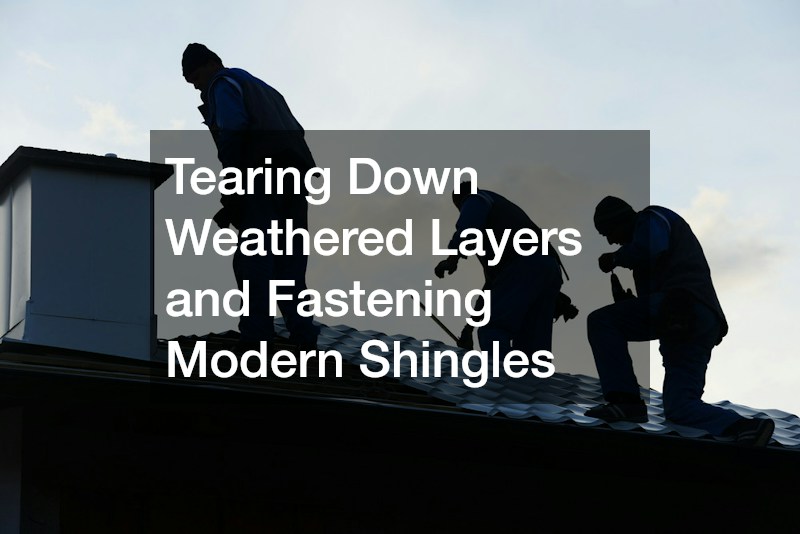
The structural integrity of a roof deck relies on clean, unobstructed transitions where wooden rafters meet sheathing panels. Over years of thermal shock, heavy winds, and moisture absorption, existing asphalt shingle layers buckle, lose granular coverage, and become brittle. When moisture seeps beneath degraded shingles, it softens the underlying wooden sheathing, leading to hidden rot and attic leaks. Trying to save money by nailing fresh shingles directly over an existing layer adds excessive weight to structural trusses, traps heat, and conceals decking rot that compromises the entire framing structure.
Executing a durable roofing installation requires stripping the surface down to bare wooden sheathing so technicians can inspect, repair, and reinforce the underlying deck. Installers cut out delaminated plywood panels, install self-adhering ice-and-water membranes along vulnerable valleys and eaves, and lay tear-resistant synthetic underlayments across the roof field. Modern architectural shingles are then fastened using corrosion-resistant pneumatic ring-shank nails placed along designated manufacturer nailing lines. Proper step-flashing around chimneys and dormers, paired with continuous ridge vents, creates a balanced intake-and-exhaust ventilation loop that keeps the roof watertight and functional for decades.
Washing Exterior Panes and Clearing Accumulated Pollen
Architectural windows provide natural daylight and visual connection to outdoor spaces while acting as a vital thermal barrier. Throughout the year, exterior glass panes collect dense layers of environmental grime, including airborne exhaust soot, sticky tree sap, mineral-laden irrigation spray, and spring pollen. Under prolonged exposure to direct solar heat, these organic deposits bake into the microscopic pores of the glass, creating cloudy films and hard-water staining that routine garden-hose rinsing cannot clear. Beyond diminishing natural light and curbing property aesthetics, neglected window panes accelerate the dry-rot of exterior vinyl, aluminum, or silicone glazing seals.
Restoring optical clarity and extending the life of window assemblies requires specialized filtration rigs, safety equipment, and purified water cleaning techniques. Hiring reputable local window cleaning companies ensures that high-elevation panes, transom glass, and roof skylights are cleaned safely without damaging exterior trim. Trained technicians utilize multi-stage reverse-osmosis and deionization water-fed pole systems that remove dissolved minerals from the rinse water to deliver a spot-free dry. In addition to scrubbing glass panes with soft brushes, professional window technicians wipe down sills, wash protective screens, and clear lower weep holes so trapped condensation drains freely away from interior framing.
Sanding Cabinet Faces and Applying Factory Enamels
The domestic kitchen functions as the heart of family life, but daily use quickly wears down cabinetry surfaces. Cooking grease vapors, food spills, high-moisture steam, and continuous handling degrade original clear finishes and leave cabinet doors looking faded, scratched, and worn. Many homeowners assume that outdated cabinets demand a disruptive, expensive tear-out and replacement, even when the underlying hardwood boxes and structural framing remain solid. Choosing to refinish existing cabinetry offers an eco-friendly, cost-effective alternative that revitalizes the kitchen layout while preserving high-grade hardwood infrastructure.
Achieving a durable, factory-smooth finish on existing woodwork requires meticulous surface preparation, mechanical sanding, and specialized coating products. Enlisting professional kitchen cabinet painters guarantees that cabinet doors and drawer fronts are removed, labeled, and transferred to a climate-controlled spray facility. Technicians degrease hardwood profiles, fill grain pores with specialized wood compounds, and sand every surface to open the wood fibers for bonding. Applying high-adhesion bonding primers followed by multiple coats of polyurethane-modified acrylic or catalyzed lacquer enamel creates a hard, washable surface that resists chipping, heat, and moisture for years.
Waterproofing Shower Surrounds and Upgrading Vanity Fixtures

Residential bathrooms endure high humidity and intense water exposure every day, making water management critical for floor and wall preservation. Aging tile surrounds often develop hair-thin fractures along grout lines, loose caulking beads around tubs, and missing silicone seams along plumbing supply transitions. Over months of shower use, water slips behind cracked tiles, soaking drywall boards, rotting subfloor framing, and creating toxic mold colonies behind finished surfaces. Modernizing an outdated bathroom refreshes its appearance while replacing failing moisture barriers with modern waterproofing assemblies.
Executing a successful bathroom remodeling project involves stripping wet areas down to bare wall studs to install cement backer units and continuous waterproofing sheet membranes. Certified contractors flood-test custom shower pans, level sloped subflooring, and set non-porous porcelain or ceramic tile using polymer-modified thin-set mortars. Upgrading vanity countertops, installing low-flow thermostatic mixing valves, and wiring ultra-quiet high-CFM ventilation fans exhausting moisture outside prevents surface condensation. This comprehensive renovation preserves structural framing while providing a safe, clean, and luxurious personal space.
Grinding Concrete Slabs and Applying Polyaspartic Topcoats
Concrete utility floors across residential garages, basements, and workshops endure heavy mechanical loads and chemical spills throughout their lifespan. Untreated concrete is naturally porous, absorbing automotive lubricants, road salts, battery acids, and groundwater that cause chemical breakdown and surface spalling. Furthermore, standard tire friction pulls up thin hardware-store paint coats, leaving patchy bare concrete that creates persistent dust across the room. Protecting a structural slab requires a heavy-duty coating system that chemically bonds to the concrete matrix and resists severe abrasion.
Installing a showroom-grade coating demands mechanical diamond grinding to open concrete capillaries and remove surface contaminants. Working with an experienced epoxy floor installer ensures that hairline cracks and joint seams are repaired with industrial elastomeric polyurea fillers before any base coats are laid. Technicians apply a deep-penetrating 100-percent solids epoxy or polyurea primer, scatter decorative vinyl color flakes across the field, and seal the floor beneath a chemical-resistant, UV-stable polyaspartic clear topcoat. This non-porous floor repels motor fluids, eliminates concrete dusting, and cleans easily with basic damp mopping.
Installing Mesh Screens and Preventing Debris Accumulation
Perimeter eave channels are designed to catch cascading roof runoff and route it through downspouts to protect the home’s foundation. However, nearby trees shed leaves, pine needles, seed pods, and twigs that quickly accumulate inside open gutter troughs. These organic blockages trap standing water, turning eave troughs into heavy, waterlogged hazards that sag away from fascia boards, rot wooden soffits, and spill dirty water against foundation walls. Climbing ladders to clear decomposing sludge several times a year is dangerous and provides only temporary relief during fall and spring shedding cycles.
Adding protective barrier profiles over open gutters eliminates seasonal maintenance demands while keeping water flowing freely into downspout drops. Investing in modern gutter covers provides micro-mesh stainless steel screens that prevent debris, roof granules, and pests from entering the trough. Professional installers secure these low-profile covers directly to the gutter lip and fascia brackets, allowing high-velocity storm runoff to pull into the channel via surface tension while leaves and debris dry and blow off in the wind. This upgrade safeguards fascia boards from rotting, prevents winter ice dams, and keeps roof drainage clear through every storm.
Pumping Underground Tanks and Inspecting Absorption Fields

Private onsite wastewater management systems quietly treat household greywater and blackwater away from municipal utility mains. Solid waste, household grease, and laundry detergents collect within a buried septic holding tank, where natural anaerobic bacteria break down solid materials into sludge and floating scum layers. The clarified effluent liquid then exits into a subterranean distribution network of perforated pipes known as the drain field. Because this system is entirely buried beneath the yard, homeowners often neglect maintenance until warning signs appear—such as sewage backups in basement plumbing fixtures, foul outdoor odors, or soggy patches over the absorption field.
Preventing drain field saturation and catastrophic plumbing backups requires regular tank maintenance and system evaluations. Hiring a dependable local septic company ensures that holding tanks are pumped on a balanced three-to-five-year schedule to remove settled sludge layers before they wash into the absorption field. Experienced septic technicians measure scum and sludge depths, check inlet and outlet sanitary baffles, wash effluent filter cartridges, and inspect drain field soils for signs of biological clogging. Routine maintenance prevents expensive drain field replacements, protects local groundwater supplies, and keeps domestic waste lines flowing smoothly.
Preserving the functionality, visual beauty, and market value of a home requires an integrated maintenance strategy that unites interior living spaces with exterior protective systems. From balancing central air circulation and updating bathroom waterproofing to stripping worn roofing materials, refinishing kitchen cabinets, and coating high-wear garage floors, each improvement protects structural frameworks and improves daily living. At the same time, keeping exterior windows clean, installing debris-free gutter covers, and servicing underground septic systems shields the home against moisture intrusion, foundation damage, and unexpected mechanical breakdowns.
Shifting from reactive emergency repairs to an organized, planned schedule of home improvements saves owners money and prevents minor material wear from causing severe damage. By learning to identify early symptoms of component wear, performing regular seasonal evaluations, and partnering with licensed trade craftspeople for technical updates, homeowners can safeguard their investment. Approaching property defense and interior renovations with deliberate care and quality craftsmanship ensures that your residence remains safe, energy-efficient, and comfortable through every season.